

Sometimes, people don't need advice. They just need to feel understood.
A friend tells you they had a difficult day. A colleague seems overwhelmed. Someone you care about opens up about something painful. In these moments, most of us hesitate: What should I say?
Empathy gives you a way in. It's not about having the perfect response or deep psychological insight. It's about recognizing what someone might be experiencing and responding with care. Often, a few thoughtful words are enough to help someone feel seen.
In this article, you'll learn:
- What empathy is
- Why Empathy Matters
- How it differs from sympathy
- Practical examples you can use
- Ways to build empathy over time
What Is Empathy?
Empathy is the ability to understand and acknowledge another person's emotions. It can be expressed through active listening, validating feelings, and offering supportive responses.
In practice, it's simple: notice what someone might be experiencing and reflect it back in a way that shows you understand.
You don't need to fix anything. In fact, jumping to solutions too quickly can shut people down. Most of the time, people want to know that their emotions make sense.
Psychologists describe empathy as understanding someone's emotional experience while recognizing that it is separate from your own. You're trying to imagine their perspective—not replace it or assume you know exactly how they feel.
This distinction helps keep empathy supportive while maintaining healthy emotional boundaries.
What empathy does not require
You might hold back because you think empathy requires more than what you're able or willing to give. But empathy doesn't mean:
- Agreeing with everything someone says
- Taking sides
- Absorbing their emotions
- Taking responsibility
- Saying the "perfect" thing
Sometimes the most effective response is also the simplest: listening and acknowledging.
A Simple Framework for Practicing Empathy
You don't need to master empathy to start using it. When you're unsure what to say, follow this pattern:
- Notice what the person might be feeling
- Name or connect with that emotion
- Respond in a way that shows understanding
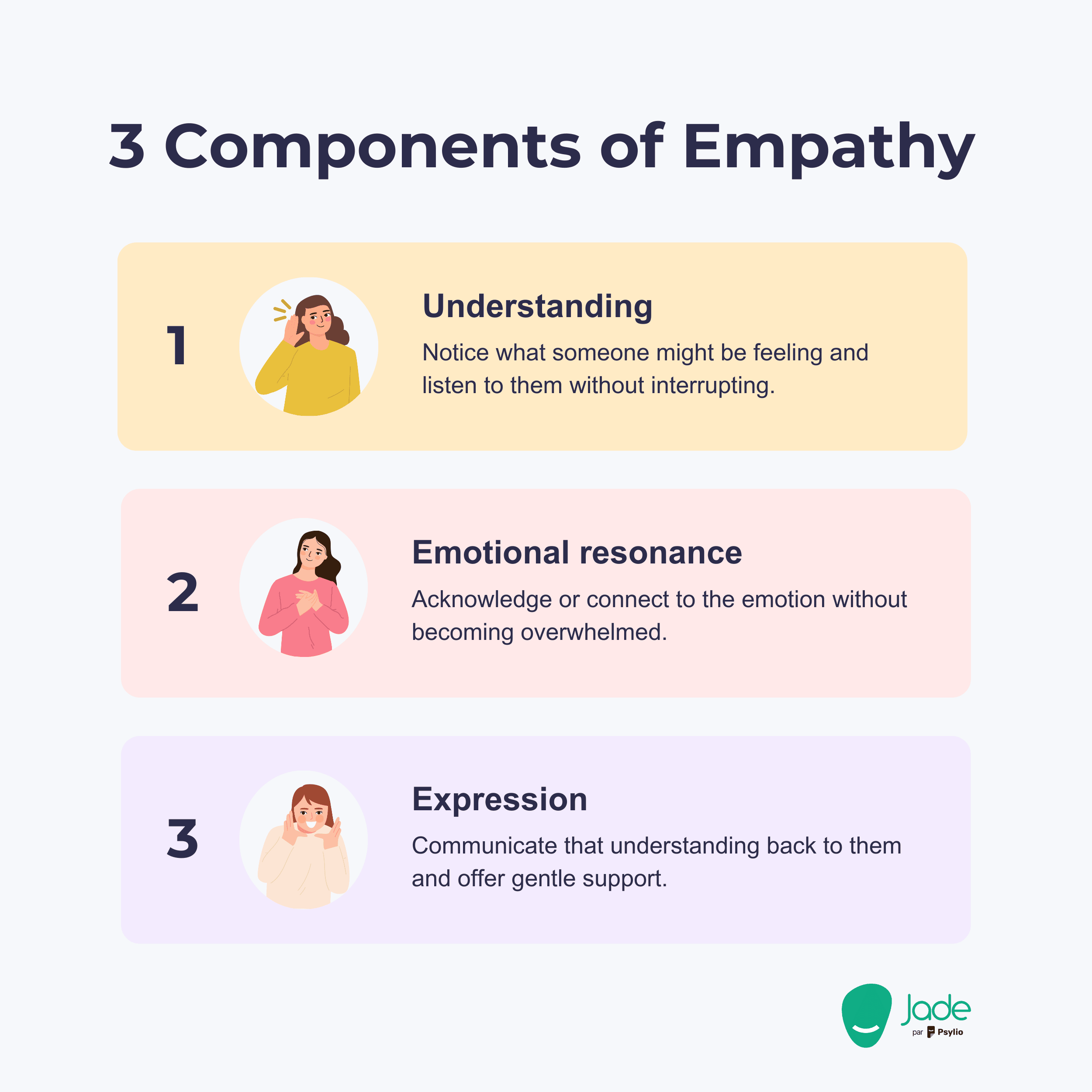
Keeping this framework in mind can help you avoid defaulting to automatic reactions and make it easier to respond thoughtfully.
Why Empathy Matters
Practicing empathy strengthens relationships, improves communication, and supports emotional well-being. When people feel understood, they're more likely to open up, trust you, and stay calm during difficult conversations.
Research consistently shows that empathy contributes to stronger interpersonal bonds, but you can also notice the effect in real time.
Think about the difference between these two responses:
- That sucks. Here's what you should do…
- That sounds really frustrating. What's been the hardest part?
The second response invites connection. The first tends to shut it down.
Empathy also helps regulate emotions. When someone feels heard, their stress tends to decrease because they're no longer carrying the experience alone.
Empathy vs. Sympathy: What's the Difference?
Empathy and sympathy are often used interchangeably, but they reflect two different ways of responding to someone's difficulties.
- Sympathy usually means feeling sorry for someone.
- Empathy means trying to understand what the other person might be feeling and acknowledging that emotion.
The difference becomes clearer in conversation. For example, if a friend tells you they lost their job:
- Sympathetic response: I'm so sorry that happened to you.
- Empathetic response: That must be really stressful. How are you holding up?
Both responses come from a place of kindness. But empathy often feels more supportive because it focuses on the person's emotional experience, not just on the situation.
It can also feel more meaningful for the person expressing it. Instead of simply feeling sorry, you show curiosity about what the other person is going through. This creates space for a deeper conversation and more thoughtful support.
Empathy Examples to Use in Conversations
Empathy appears in small, everyday moments. It might be a thoughtful question, a few supportive words, or simply listening without interrupting.
Below are examples of what empathy can look like in different situations.
Empathy in Everyday Interactions
If someone shares a frustrating situation, you might respond with:
- That sounds really difficult.
- I can understand why that would feel frustrating.
- Thank you for sharing this with me.
- I'm here to listen.
These responses acknowledge the person's feelings without trying to immediately fix the situation.
Empathy in Relationships
Empathy plays an important role in close relationships. With partners, friends, or family members, it helps build trust and navigate challenges.
If your partner tells you they feel overwhelmed at work, you might say:
- That sounds like a lot to deal with.
- I'm really glad you told me.
- It makes sense that you're feeling stressed.
- That must have been exhausting.
These responses show that you're paying attention—not just to the situation, but to how it feels.
Empathy in the Workplace
Work environments can be stressful, and small moments of understanding can make a meaningful difference.
- It looks like you've had a lot on your plate lately.
- Let me know if there's anything I can do to help.
- That sounds frustrating. Thanks for explaining.
Simple responses like these show respect and make collaboration easier.
Empathy When Supporting a Loved One
Empathy becomes especially important when someone close to you is going through a difficult time.
A loved one might open up about anxiety, grief, or something deeply personal. You might say:
- Thank you for trusting me with this.
- You're not alone in feeling this way.
- Take your time. I'm here.
- That must be really hard.
If you've ever been on the receiving end of this kind of response, you know how powerful it can be.
5 Simple Ways to Build Empathy
Empathy is a skill that grows with practice. You don't need to change your personality—small shifts in how you listen and respond can go a long way.
Here are five simple ways to start.
1. Practice Active Listening
Give the other person your full attention. Listen without interrupting or planning what you'll say next.
Small signals also help show you are present: nod, maintain eye contact, or offer brief verbal cues.
Approaches like compassionate listening emphasize staying present, suspending judgment, and allowing the other person to express themselves fully.
2. Get Curious
Instead of focusing only on the facts of the situation, try to notice the emotions behind what someone is saying.
You can also ask gentle questions like:
- How did that make you feel?
- What was the hardest part of that for you?
Curiosity shifts the conversation from problem-solving to understanding.
3. Reflect Before Advising
It can be hard not to jump in with advice when someone opens up. Often, that instinct comes from wanting to help, or from discomfort with seeing someone struggle.
Before offering solutions, acknowledge the emotion.
- Instead of: Here's what you should do.
- Try: It sounds like you're feeling overwhelmed.
Nonviolent communication follows this same principle: focusing on feelings and needs before reacting.
4. Take a Moment to Self-Regulate
Empathy is harder when you feel stressed, upset, or overwhelmed.
If you notice yourself reacting strongly:
- Pause
- Take a breath
- Slow down your response
Feeling more grounded makes it easier to listen and respond with care.
5. Practice Self-Empathy
Showing empathy toward others often starts with how you relate to your own emotions.
This means noticing what you're feeling without judgment.
- Instead of: I shouldn't feel this way.
- Try: This is a tough moment.
Practices like journaling, mindfulness, or reflecting on difficult conversations can help build this awareness over time.
When Empathy Feels Difficult
Even with the best intentions, empathy isn't always easy. Emotional conversations can be challenging, especially when you're stressed, tired, or unsure how to respond.
It can be harder when:
- You're overwhelmed or emotionally drained
- You're dealing with your own problems
- Conversations about feelings feel unfamiliar or uncomfortable
- You find it difficult to read emotional cues
In these moments, it's easy to default to changing the subject, becoming overly critical, or minimizing what the other person is experiencing:
- It's not that big of a deal.
- You'll be fine.
- Let's just focus on what to do next.
While these responses are common, they often dismiss the person's experience rather than support it.
If you're unsure what to say, start simple and acknowledge what they're going through.
Small Acts of Empathy Add Up
Empathy doesn't require big gestures. It shows up in small, consistent responses that help people feel seen and heard.
The next time someone shares something difficult, pause before responding and try one of the examples you read in this article.
Over time, these shifts change how your conversations feel and how your relationships grow.
If emotional conversations still feel difficult to navigate, working with a mental health professional can help you build confidence and communication skills.
With Jade, you can find the professional who's right for you.